Alex Walter · 24 September 2026
Analyzing the Impact of API-Driven Ecosystems on Reducing Lead Times in Automotive Supply Chains
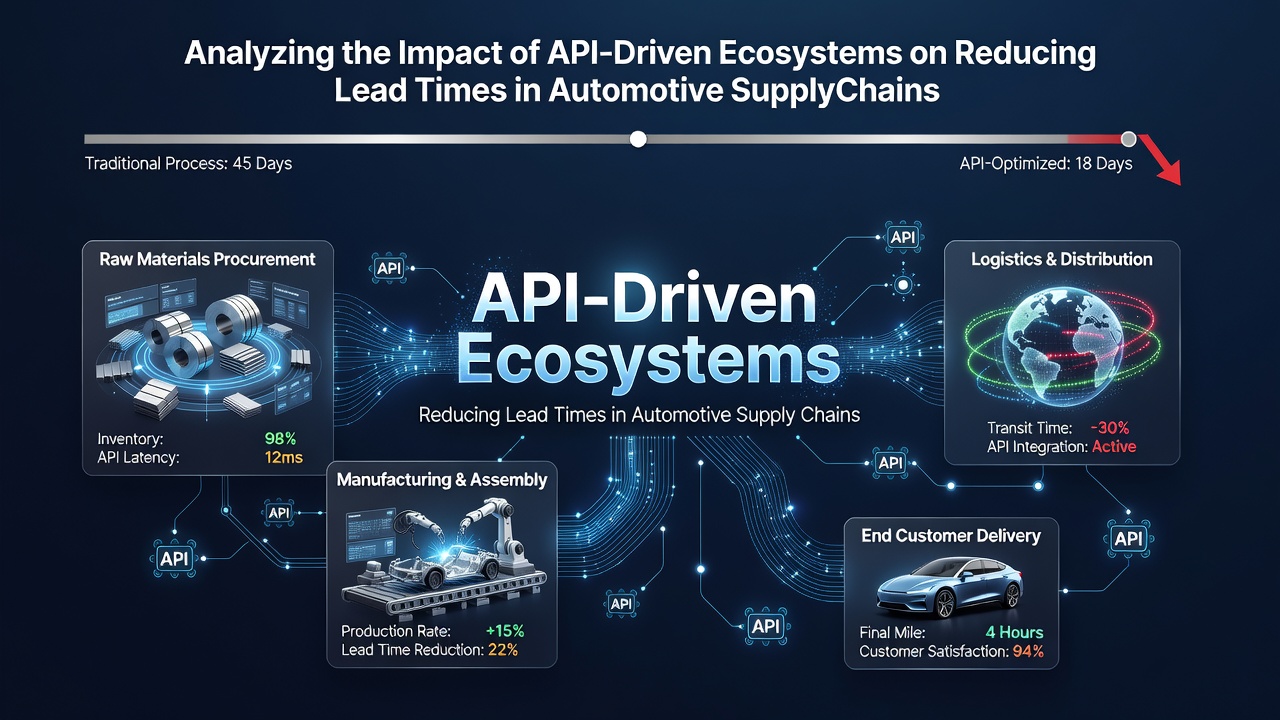
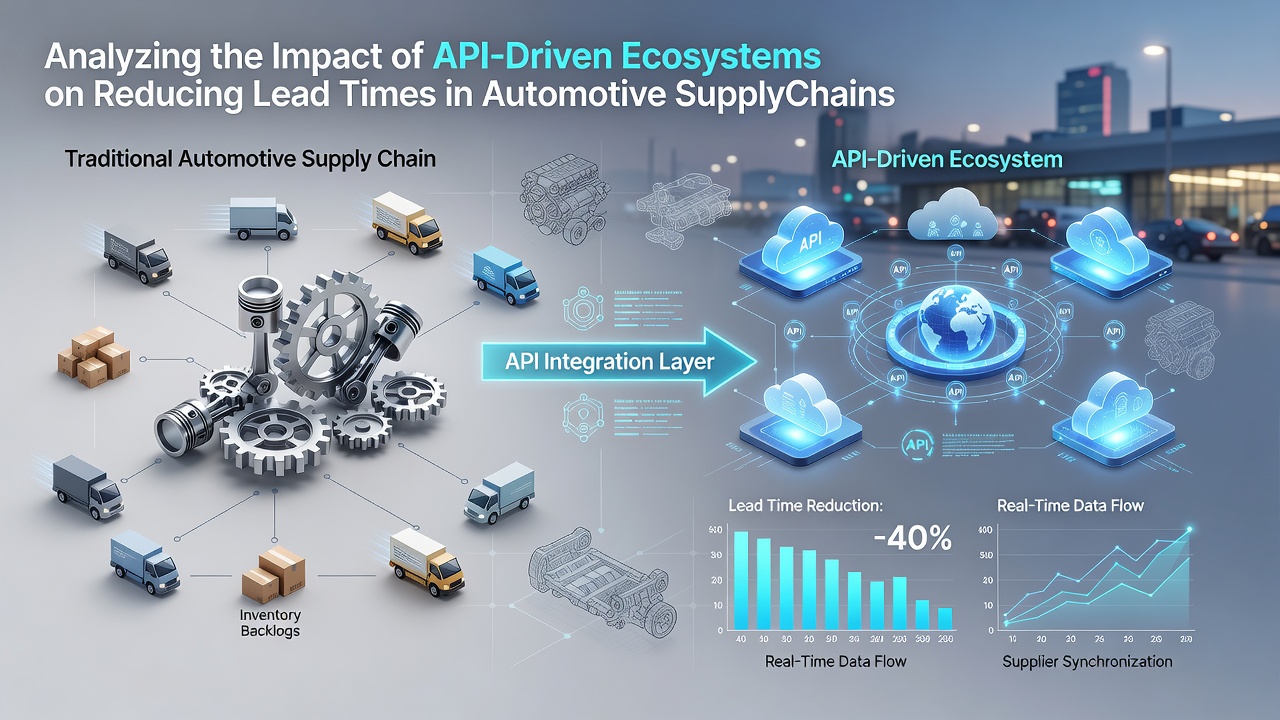
API-driven ecosystems connect suppliers, original equipment manufacturers, logistics providers, and distributors through standardized interfaces that enable seamless data exchange across the automotive supply chain. These systems replace fragmented communication methods with direct, automated flows of inventory levels, production schedules, and shipment statuses. Researchers have documented how such connectivity compresses the time between order placement and final delivery by eliminating delays that arise from manual data entry and siloed software platforms.
Automotive companies have adopted these ecosystems to synchronize operations among hundreds of tier-one and tier-two suppliers. According to reports from the European Commission on digital transport and logistics, API implementations allow partners to share demand forecasts and capacity updates without custom point-to-point integrations. This standardization accelerates response times when disruptions occur, such as component shortages or transportation bottlenecks.
Core Components of API Ecosystems in Automotive Networks
Modern platforms rely on RESTful and GraphQL APIs that expose real-time endpoints for order management, inventory visibility, and quality control data. Middleware layers handle authentication, rate limiting, and data transformation so that legacy enterprise resource planning systems can participate without full replacement. Industry analyses show that these layers reduce integration timelines from months to weeks when onboarding new suppliers.
Security protocols built into the APIs include OAuth 2.0 and mutual TLS, which maintain compliance with data protection regulations across multiple jurisdictions. Observers note that this architecture supports granular access controls, allowing a brake component supplier to view only the production forecasts relevant to its contracts while restricting broader financial data.
Mechanisms That Shorten Lead Times
Automated replenishment triggers activate when API calls report stock falling below predefined thresholds. Suppliers receive these signals directly into their production planning tools, which then adjust schedules without waiting for email threads or phone calls. Studies conducted by the Canadian Automotive Parts Manufacturers' Association indicate that this closed-loop process has cut average replenishment cycles by 18 to 24 percent in participating firms.
Predictive analytics modules consume the continuous data streams to forecast potential delays. When an API detects slower-than-expected component movement at a port, the system can reroute shipments or trigger alternative sourcing before the original lead time expires. In September 2026, several North American assembly plants reported measurable reductions in downtime after implementing these alert systems across their supplier bases.
Collaborative planning portals built on shared APIs let manufacturers and suppliers run joint scenario modeling. One study from the University of Michigan Transportation Research Institute found that teams using these tools reached consensus on production volumes 30 percent faster than groups relying on traditional spreadsheet exchanges. The reduction stems from immediate visibility into each party's constraints and updated forecasts.
Documented Performance Outcomes
Companies that deployed comprehensive API ecosystems recorded average lead time reductions ranging from 12 to 35 percent within the first 18 months of rollout. Metrics tracked by the Australian Department of Industry, Science and Resources show that firms sharing electronic advance shipping notices experienced fewer customs holds and quicker inbound processing at receiving docks.
Inventory carrying costs declined in parallel because safety stock buffers could be sized more precisely when demand signals propagated instantly through the network. Data from the same Australian report reveals that participating automotive suppliers lowered excess inventory by an average of 22 percent while maintaining service levels above 97 percent.
Quality feedback loops also tightened. When a defect appears at final assembly, an API call notifies the responsible supplier within minutes rather than days, enabling immediate containment actions and root-cause investigations. This speed prevents batches of nonconforming parts from accumulating further downstream.
Implementation Patterns Across Regions
European manufacturers have emphasized open standards developed under the Catena-X initiative, which promotes uniform data models for material traceability. North American firms have focused on private marketplaces that connect OEMs with smaller suppliers through vetted API gateways. Asian supply chains have integrated government-mandated electronic data interchange extensions with newer API layers to bridge legacy systems still common among smaller tier-two vendors.
Each regional approach shares the same underlying benefit: reduced manual reconciliation of orders and shipments. The differences appear mainly in governance models and the pace of supplier onboarding rather than in the technical mechanisms that drive lead time compression.
Conclusion
API-driven ecosystems have established measurable pathways for shortening automotive supply chain lead times through automated data exchange, predictive alerts, and collaborative planning. Evidence from government reports, academic studies, and industry associations consistently shows faster replenishment cycles, lower inventory buffers, and quicker quality responses when these interfaces replace slower communication methods. Continued expansion of standardized APIs across additional supplier tiers promises further gains in operational responsiveness as adoption widens.